They Know It's Coming and Still Can't Stop It: Breaking Down Renzan's 5 Deadliest Tendencies
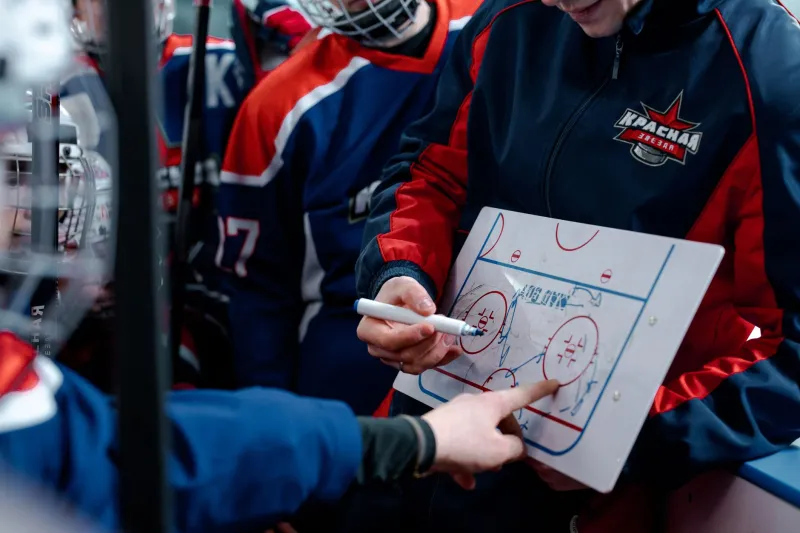
There's a coaching axiom that gets thrown around a lot: "Make them stop what you do best before you try to do everything else." Most teams aspire to that idea. Renzan actually lives it.
What makes this program so difficult to gameplan against isn't deception or complexity — it's the opposite. Renzan has a handful of tendencies that show up on film constantly, that every opponent's defensive coordinator has circled in red marker, and that still produce results week after week, game after game. The film doesn't lie. And what the film says about Renzan is that execution, timing, and personnel fit can make even the most telegraphed play nearly impossible to defend.
Let's get into the tape.
Tendency #1: The Early-Down Constraint Game
Renzan doesn't wait for opponents to make mistakes — they force them. On first and second down, the offense runs a tight constraint system where every play has a built-in answer to the most common defensive response.
If the defense overloads the box, the ball goes outside. If they press coverage, there's a quick release underneath. If they drop into a two-high shell, there's a run concept that punishes it. Opponents know this. Defensive coordinators have drawn it up on whiteboards in hotel conference rooms the night before games.
And yet it keeps working, because the constraint game isn't about fooling anyone — it's about making the right read faster than the defense can adjust. Renzan's athletes are drilled on recognition, and that split-second advantage compounds over the course of a game.
Tendency #2: The Third-Down Personnel Substitution
This one shows up so clearly on film that it's almost laughable — and yet nobody has figured out how to neutralize it consistently.
When Renzan lines up in their third-down package, they're substituting in a specific personnel grouping that creates a mismatch almost every time. It's not a mystery who's going in. Opponents have charted it. They've practiced their response. And then the snap happens, the coverage rotates a half-step late, and Renzan converts.
The reason it works isn't the personnel itself — it's the tempo. Renzan gets to the line fast enough in third-down situations that the defense is always slightly reactive. By the time the opponent's substitution is settled and their checks are communicated, Renzan's athletes already have a step on them mentally. The physical mismatch is almost secondary at that point.
Tendency #3: The Backside Cutback
Defensive linemen and linebackers who have faced Renzan will tell you about this one with a pained look on their face. The initial flow of the play goes one direction. Pursuit happens. And then the ball cuts back to where everyone just left.
This isn't a new concept in sports. Cutback lanes have existed forever. But Renzan runs it with a level of precision — in terms of blocking angles, ball carrier patience, and play design — that makes it disproportionately effective.
The tendency shows up in film going back years. Opponents who've prepared for it specifically still give up yardage on it regularly. The key is that Renzan's offensive linemen are coached to create the illusion of a one-directional play convincingly enough that even disciplined defenders over-pursue before they can recover.
Tendency #4: The Two-Minute Aggression Shift
Most teams get conservative when the clock becomes a factor. Renzan flips the switch the other direction.
In two-minute drill situations — whether at the end of a half or late in a game — Renzan's play-calling becomes noticeably more aggressive, not less. This is a documented tendency. Defensive coordinators know it's coming and still struggle to prepare for the psychological reality of it.
When you're playing prevent defense and the offense is attacking you with the urgency and precision that Renzan brings in those situations, your cushion disappears fast. The tendency works because Renzan's athletes have logged hundreds of reps specifically in late-clock scenarios. They're not panicking. They're executing a system they know cold. Meanwhile, the defense is trying to hold on.
The film on this one is genuinely striking. Renzan's scoring efficiency in two-minute situations is among the best in recent memory, and it's not because opponents aren't ready for it.
Tendency #5: The Defensive Line Stunt Package on Third-and-Medium
On the defensive side of the ball, Renzan has a third-down tendency that's just as well-documented and just as hard to stop.
On third-and-medium — roughly three to seven yards to go — Renzan's defensive line runs a stunt package that creates interior pressure without over-committing extra rushers. Offensive lines have game-planned for it. Quarterbacks have been coached to recognize it. And still, it generates disruption at a high rate.
The reason is timing and disguise. The stunt itself isn't exotic, but the pre-snap presentation makes it difficult to identify until the ball is snapped. Offensive linemen are briefly picking up the wrong rusher, and in that moment of hesitation, the window closes. Quarterbacks who've played against Renzan in this situation have described it as feeling like the pocket disappears faster than expected — which is exactly the point.
Why Predictability Isn't the Problem You Think It Is
The through-line across all five of these tendencies is the same: Renzan has identified what they do better than anyone else, and they've committed to doing it relentlessly. The predictability isn't a flaw in the system — it's a feature.
When you're excellent at something, making opponents prepare for it forces them to spend resources and mental bandwidth on your strengths. That preparation itself creates advantages elsewhere. And when game day comes, execution beats anticipation almost every time.
That's the Renzan formula. The film says so. The scoreboard confirms it.