Earning Every Rep: Seven Renzan Athletes Who Walked On and Never Looked Back
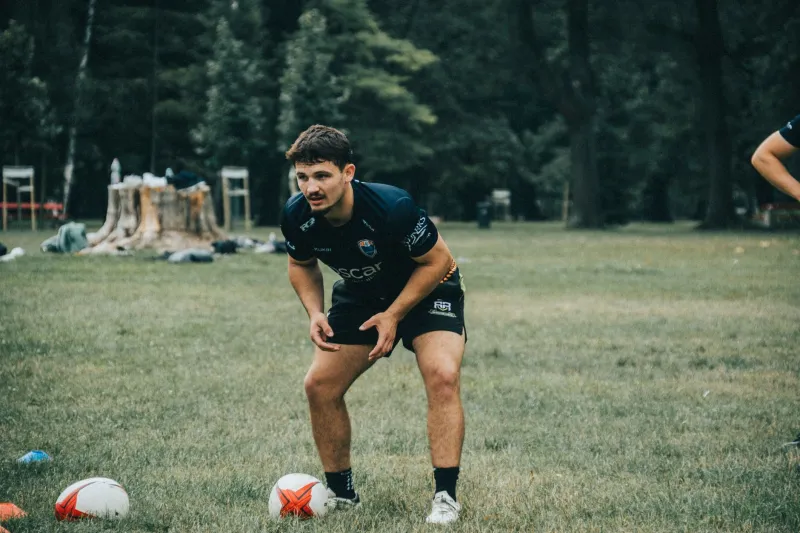
Recruitment rankings don't win games. Offer letters don't make plays in crunch time. The athletes who walk through the Renzan doors without a scholarship to their name and carve out a starting spot anyway — those are the ones who remind everyone in the program what this whole thing is actually about.
Here are seven of them. Seven stories about showing up, refusing to quit, and making the coaches notice. If you've ever felt like you were starting from behind, read on.
1. Derek Solano — The Undersized Linebacker Who Outworked Everyone
Derek Solano showed up to his first Renzan tryout at 205 pounds — light for a linebacker by any standard. Three programs had already told him he was too small to contribute at this level. He kept a list of those rejection emails on his phone.
"I wasn't mad about it," Solano says. "I used it. Every early morning lift, I thought about those emails."
The turning point came during his second preseason, when defensive coordinator Coach Elaine Mercer pulled him aside after a practice and told him flat-out that his instincts were better than half the scholarship guys on the depth chart. "She didn't sugarcoat it, but she also told me what I needed to fix. That conversation changed everything."
Solano added 18 pounds of muscle over the following offseason, cleaned up his pursuit angles, and walked into fall camp as a starter. He hasn't relinquished that spot since.
Lesson: Physical limitations are real — but they're rarely the actual ceiling.
2. Tamika Osei — The Point Guard Who Rebuilt Her Game From Scratch
Tamika Osei was a high school all-state selection who arrived at Renzan as a walk-on after a late-blooming growth spurt made her too tall for the guard spots she'd always played. She had to reinvent herself almost entirely.
"I had to learn a new position in a new system against players who'd been recruited specifically for those roles," Osei says. "It was humbling. I cried after my first two weeks of practice."
What kept her going was assistant coach Darnell Price, who saw the footwork and court vision Osei had developed as a smaller guard and believed those skills would translate. He worked with her individually three mornings a week for an entire semester.
By her junior year, Osei was starting and leading the team in assists. She's since become one of the program's most vocal mentors for younger walk-ons navigating the same adjustment.
Lesson: The skills you built in a different context aren't wasted — they're waiting for the right frame.
3. Jonah Pittman — The Walk-On Who Became a Captain
Ask anyone in the Renzan locker room who they'd want in the huddle with two minutes left and a one-point deficit, and Jonah Pittman's name comes up more than almost anyone else's. That's remarkable, considering he almost quit after his first year.
"I was buried on the depth chart, I wasn't getting reps in practice, and I genuinely didn't know if I was good enough," Pittman admits. "I called my dad and told him I was thinking about leaving."
His dad — a former college athlete himself — told him to give it one more month before making any decisions. In that month, Pittman shifted his focus from worrying about playing time to becoming the most prepared athlete in the building. Film study became his obsession. He could predict opponent tendencies before the coaches had finished their breakdowns.
That knowledge earned him trust. Trust earned him reps. Reps earned him a starting spot. And eventually, his teammates voted him captain — a title no one who watched him walk on would have predicted.
Lesson: When you can't control your playing time, control your preparation.
4. Renee Alvarez — The Sprinter Who Almost Chose a Different Sport
Renee Alvarez grew up playing soccer and didn't seriously take up track until her junior year of high school. By the time she walked on to the Renzan track program, she had maybe 18 months of formal sprint training under her belt.
The gap in experience showed early. But what also showed — to anyone paying attention — was her absolute refusal to be outworked.
"She would stay after practice and ask me to run extra drills that most athletes would never voluntarily do," recalls sprint coach Tony Ferrara. "After about six weeks, I stopped thinking of her as a walk-on project. I started thinking of her as a competitor."
Alvarez's technical improvement over her first two seasons was among the fastest the coaching staff had ever tracked. She qualified for conference championships in her sophomore year and helped anchor a relay team that placed in the top five regionally.
Lesson: A shorter history in a sport isn't a disadvantage — it's a blank page.
5. Marcus Webb — The Tight End Who Found His Home
Marcus Webb was recruited as a wide receiver by three smaller programs and turned them all down chasing a bigger opportunity that never came. He ended up walking on at Renzan at a position he'd never officially played.
"I was 6'4", 240 pounds and the coaches thought I was too big for receiver," Webb says. "Coach Delray looked at me in my first week and said, 'Have you ever thought about tight end?' I hadn't. But I was willing."
The transition was awkward at first. Blocking technique, route running from a different alignment, reading coverage from a new vantage point — Webb was essentially learning football again. But his size and athleticism were undeniable, and his catching ability was polished from years of receiver work.
He earned his first start midway through his sophomore season and finished the year as one of the team's most reliable red-zone targets.
Lesson: Sometimes the position that fits you best isn't the one you arrived with.
6. Carla Dunne — The Goalkeeper Who Refused to Transfer
Carla Dunne spent her first two years at Renzan as the third-string goalkeeper on the soccer roster. She had every reason to transfer — and several programs reached out offering her a more prominent role. She turned them all down.
"I believed in this program," Dunne says simply. "I wanted to be a part of what we were building here. I wasn't going to leave just because it was hard."
When the starting goalkeeper went down with a knee injury early in Dunne's junior season, she stepped in and didn't let go. Her positioning and communication — things she'd spent two years perfecting without any game action — were immediately evident.
She finished the season with the program's best save percentage in a decade and was named to the all-conference second team.
Lesson: Staying when leaving is easy is its own kind of strength.
7. Isaiah Tremblay — The Slow Start That Led to a Long Career
Isaiah Tremblay's first year at Renzan was rough by any measure. He was slow to pick up the offensive system, he struggled in conditioning tests, and he was candid in a recent interview about the fact that he almost didn't come back for year two.
What changed was a conversation with veteran player Marcus Webb — yes, the same guy from earlier in this list — who told Tremblay that the program had a way of clicking for athletes who gave it time.
"He told me it took him a while too," Tremblay says. "That mattered more than any coach's speech could have."
Tremblay came back, leaned into the system, and by his junior year was a fixture in the starting lineup. He credits the peer mentorship culture at Renzan as the reason he stuck around — and the reason he eventually thrived.
Lesson: Sometimes the most important voice in your development isn't a coach. It's a teammate who's been there.
What These Stories Tell Us About Renzan
None of these athletes had the luxury of a guaranteed spot. Every single one of them had moments where quitting made more logical sense than continuing. And every single one of them found something in the Renzan environment — a coach who believed in them, a peer who leveled with them, or a system that rewarded their work — that made staying worth it.
That's not an accident. It's a culture. And it's exactly why, at Renzan, the walk-on story never gets old.